
Cracked, wrinkled hands grip a baseball tightly. Fame and glory in the game he loved forever evaded Guerrero Montes, but the weight those hands carry goes far beyond a missed fastball.
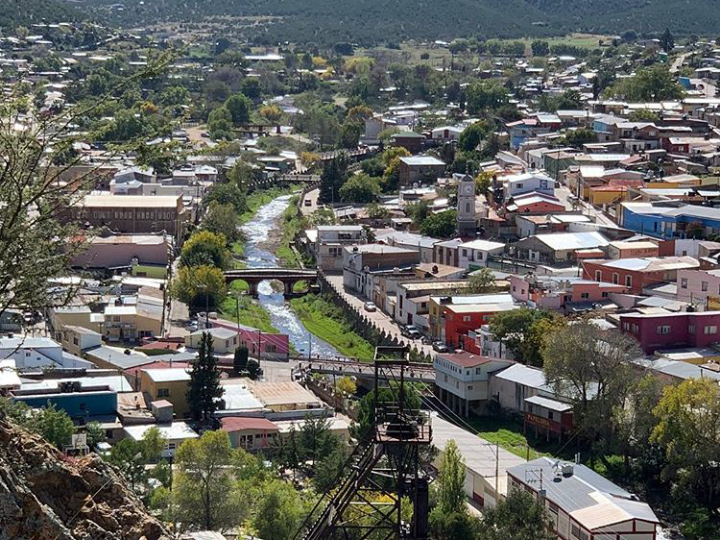
Now nearly 84 years old, Montes was once an outstanding up-and-coming pitcher. At 16, he earned an invitation to a baseball showcase in Mexico City for a chance to make the national team. For a kid from the mountain town of Santa Bárbara, Chihuahua, it felt like the first real door opening.
Baseball was spreading fast across Latin America. Long before Fernando Valenzuela became a household name, Mexican teenagers dreamed of becoming what he eventually was.
“Valenzuela was always my favorite,” Montes said. “Before he was famous, there were tons of young Mexicans hoping to break through. I was one of them.”
That belief carried him from Juárez to Mexico City on a day-long bus ride with friends and barely enough money for food and the trip home. They slept in a park the night before the tryout. When dawn broke over the Valley of Mexico, something was wrong.
Montes was missing.
The friends eventually found him slumped in a cantina booth, still drunk from the night before. The bar owner splashed him with cold water, poured him coffee, and sent him on his way. Hungover and unfocused, Montes took the mound anyway.
The results were predictable. He couldn’t find the strike zone. His mechanics unraveled. Within hours, the dream was over.
“I was sick with disappointment,” Montes said. “If I hadn’t been drinking, maybe things would’ve been different.”
That day closed one chapter and opened another, one defined by abuse.
Montes had already run away from home years earlier, escaping a violent father and a childhood shaped by fear. In Juárez, he lived with his brothers and worked whatever jobs he could find, clinging to the hope of someday crossing into the United States. Drinking became a habit, then a dependency. By 17, alcoholism and smoking had taken hold.
His mother, Manuelita, eventually fled the ranch (ranch being generous) with the remaining children and joined him and his brothers in Juárez. Life became a cycle of low-paying work and survival. Dreams narrowed. Time passed.
In his mid-twenties, fate intervened outside a burrito stand near downtown Juárez. Montes met Elfega Valenzuela. Love followed quickly. Marriage came next. Children soon after.
Their first child, Ana Laura, was born in 1969. Months later, the family crossed into El Paso and never returned to Mexico as Mexicans. The label “illegal alien” followed them. A second child, Javier, was born in Los Angeles, where Montes found work as a luggage handler at LAX.
“It was a pain in the ass,” Montes said. “But it was the best pay I ever had. And I loved being near the Dodgers.”
Baseball never left him, even as alcohol stayed. The family bounced between Los Angeles, El Paso, and Juárez, chasing work and familiarity, never quite finding peace.
“We were always moving,” Ana said. “My dad wanted to be in Mexico, then hated it. Wanted LA and El Paso, then hated that too.”
The final child, Iván, was born years later. Around that time, the drinking finally stopped, but not before leaving scars.
“My dad was terrible,” Ana said. “He used to beat the crap out of my mom when he would drink. We always dreaded it. Almost every night that he would get out to drink, my dad would come up and beat my mom, and as the drinking kind of tailed off as we got older, he would just beat up on Javier. He was a really bad dad.”
Those years matter because cycles don’t disappear on their own. They echo.
Montes worked dead-end jobs, supporting his family quietly, never escaping the grind. But something changed when Ana’s first child was born in 1993. The smoking stopped. Drinking stayed gone. Guerrero Montes became “Bolo,” a toddler’s attempt at saying abuelo.
As a grandfather, he was transformed.
Bolo took his grandson to Dodger Stadium. He talked about baseball with him endlessly. He spoiled his grandchildren without restraint. The man who once lost himself to violence learned how to show love softly and deliberately.
That redemption matters deeply to someone who grew up knowing both sides of him and who would later survive domestic violence as well.
There are shared lines between a grandfather and a grandson: rough childhoods, chaotic young adult years, homes shaped by fear rather than safety.
Baseball became common ground. It was never just a game; it was structure, escape, something predictable when life wasn’t, and most of all something to find hope in and cheer for.
Watching Bolo love his grandchildren didn’t erase the past, but it complicated it. It proved that people are more than their worst chapters. It showed that accountability can exist alongside growth. Survival and families don’t have to end in bitterness.
Now a great-grandfather, Bolo’s cracked hands have built something far more lasting than a pitching career. As the years melt away, those hands represent a life that chose, eventually, to stop hurting and start protecting.
“I’m glad things happened the way they did,” Montes said. “I wish I could change a million things, but if Mexico City had worked out, I don’t think I’d be this happy.”
Some dreams die so others can live. In this family, pain did not disappear, but love learned how to outlast it.
