
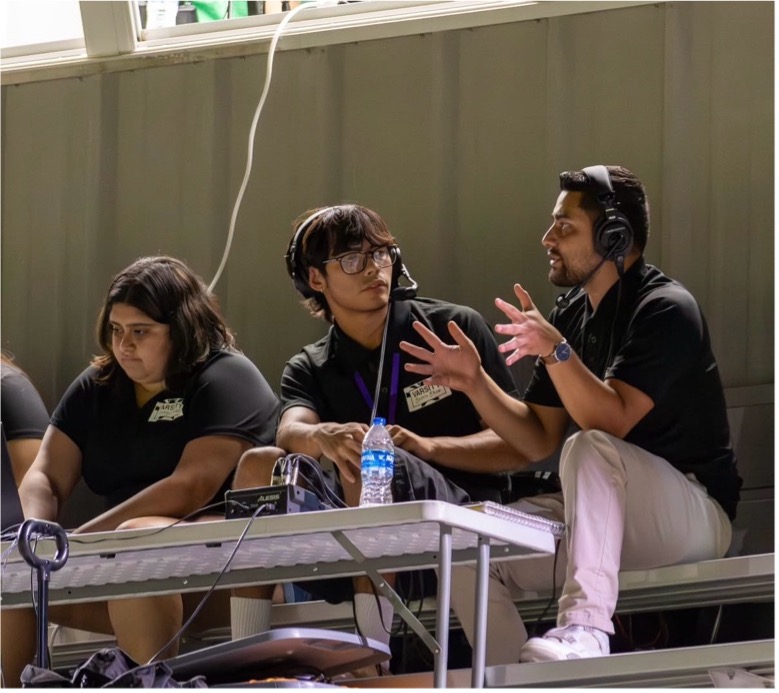
Jorge Guajardo laughed as he reminisced about the moment his love of football began.
In an effort to improve his PlayStation One collection, starring classic games like Crash Bandicoot and Medal of Honor, he asked his mom for a used copy of Madden NFL 97.
After spending hours with the controller and hearing John Madden yell “boom” play after play, a new love for the game was born. “I already liked the Cowboys but didn’t understand the game of football,” Jorge said. “I remember the players looked all clumpy and weird like action figures.”
While video game graphics have come a long way since the 90s, so has Jorge’s passion for football. Little did he know that day in the mall would be a memory that inspires his professional career.
The 32-year-old sports journalism graduate student grew up in El Paso, Texas. With just under 700,000 people, he classifies the city as a type of “third space,” far from large cities like Dallas but driven by the Mexican American heritage he’s proud of.
Close to 80% of El Paso is Latino, which presents some residents with the challenge of navigating dual identities. “It’s not really Mexico, but it’s also not really the U.S.,” Jorge said.
After joining the Navy at age 23, he left Texas for the first time and jumped at the opportunity to experience diverse cultures.
Spending time in places like San Diego and Japan shaped his innate curiosity about others and the systems that affect them. This remains central to his reporting today, questioning systemic issues in sports, ranging from unregulated NIL to the exploitation of Black athletes at the amateur and collegiate level.
One issue close to his heart is the pay-to-play model that continues to dominate youth sports and alienate families who can’t afford to sign their kids up for expensive club teams.
For people who spent time in travel programs such as AAU, the challenges these systems pose to young athletes – particularly athletes of color – may be difficult to recognize.
That’s why proximity matters.
Growing up in a community dealing with drugs and violence, Jorge recalls the importance that sports like basketball played for him and other young people.
“You see how monetized a game like basketball has become,” Jorge said. “Now these parents won’t invest in their child’s interests, unless they have the money for AAU or the newest shoes.”
His awareness of the power of sports as an outlet for self-expression and belonging speaks to his dedication to meeting people where they are through storytelling.
Jorge wasted no time doing this upon moving to the Valley.
Last September, he helped launch the first-ever Spanish broadcast in Arizona high school football history, leading play-by-play for the network Viva Varsity.
Decades after being introduced to hilarious PlayStation One renderings of Troy Aikman and Deion Sanders, he paid his love of the game forward.
His work broke language barriers and increased accessibility for Spanish speaking families and high school athletes, so that the most popular sport in the country can work towards becoming truly universal.
Culture also continues to play an important role in Jorge’s life off the field. He remains close with his mom and sister and proud of their Mexican heritage.
At one point, the joy overflowed in his voice while talking about the El Paso staple, Chico’s Tacos, and how their flautas are “crazy and there’s nothing else like them.”
Jorge’s planning to graduate later this fall, so only time will tell where and how he’ll choose to use his talents as a journalist. Lots of aspects of life are filled with uncertainty, especially careers.
Embracing it is part of the excitement.
What I do feel confident about is Jorge’s genuine enthusiasm for sports and unwavering commitment to understand and support others.
I can’t wait to see his impact on journalism and the people he inspires along the way.
