
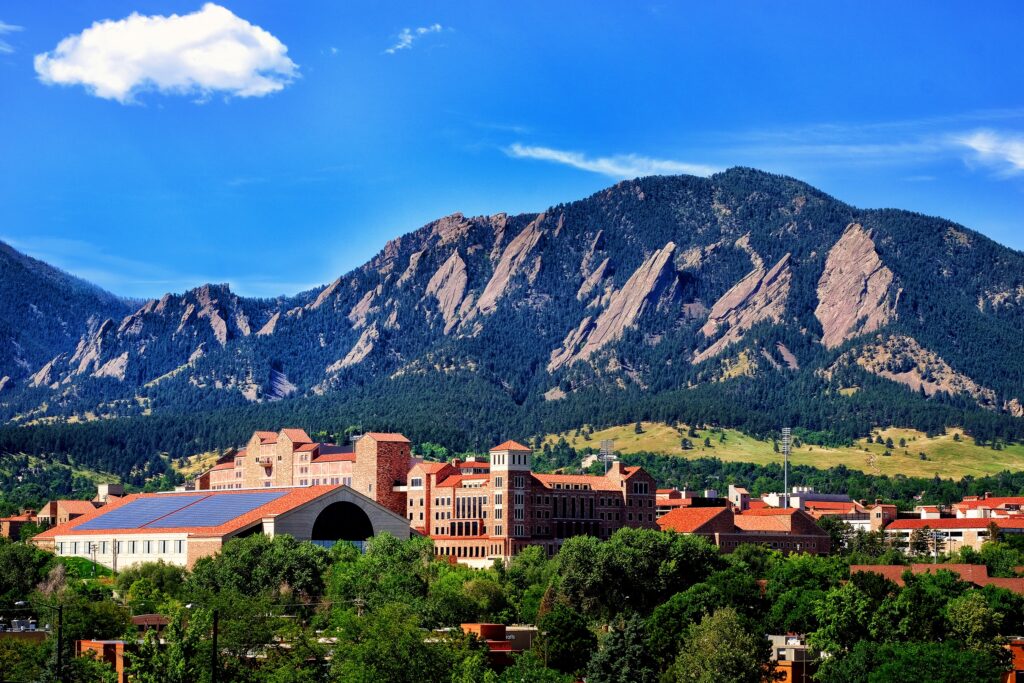
My name is Caleb Craig. I found my way into journalism during my undergrad at the University of Colorado at Boulder. There I studied journalism for three years but ended up switching my major to communication. I thought I was interested in journalism because of the newsworthy aspect of storytelling, but it was really the lack of sports storytelling being implemented throughout the program that made me feel detached. I found myself disinterested in the polarizing nature of politics and felt it wasn’t my end all be all. Unfortunately CU Boulder didn’t have a sports journalism degree, which would have been geared towards my passion. Sports and reading about the stories that surround the world of sports have always been what I pay attention to and retain the most information about.
After finishing my undergrad in 2022 and then moving to Glendale a week after graduation, I worked in marketing for a mobile home company. After hammering away for three years towards doing something that wasn’t self-fulfilling, so decided to take a leap of faith and pursue a graduate degree in sports journalism. This led me to Cronkite. I chose Cronkite over other graduate schools, well because of proximity, among other reasons. I live 20 minutes away from campus and the in-state tuition was a nice plus. I also was set on Cronkite because of its esteemed faculty and reputation. The program caters to its students, which was something I was looking for. In 2016, I attended a two-week long sports broadcasting camp at Cronkite. The facility was phenomenal and appreciated the access that Cronkite gave us. Commentary is essential to become an honest and transparent individual. It allows people to question and propel forward conversations. That belief is also what led me to this class. Commentary is where sports journalism goes beyond recounting what happened and begins to explore why it matters. Reporting delivers facts. Commentary provides context and interpretation. It challenges writers to think critically and articulate their perspective clearly rather than staying on the surface.
I believe commentary is important because sports do not exist in isolation. They intersect with culture, money, identity, and pressure in ways that are often overlooked. Commentary creates space to question decisions, challenge narratives, and highlight stories that might otherwise be ignored. Without it, sports journalism risks becoming repetitive and detached from the people it is meant to serve. What I hope to get out of this class is confidence in my ability to analyze and offer perspective. I want to improve how I structure arguments and support them responsibly. I also want to better understand how to balance opinion with fairness and accuracy. Developing a voice that feels authentic rather than forced is one of my main goals.
The sports media industry faces several challenges that make this work more difficult. Trust in media continues to decline, and social media often prioritizes speed and reaction over depth and accuracy. Journalists are frequently navigating limited access, shrinking newsrooms, and pressure to produce content quickly. These factors make thoughtful commentary harder to execute but also more necessary.
I did not arrive at journalism through one defining moment. Instead, it was a series of experiences that helped clarify where my interests and strengths align. Sports storytelling is where I feel most engaged and motivated. This class represents an opportunity to continue developing that focus and strengthen my ability to contribute meaningful commentary to the industry.
